
Healthcare Technology: Transforming Modern Healthcare Through Innovation
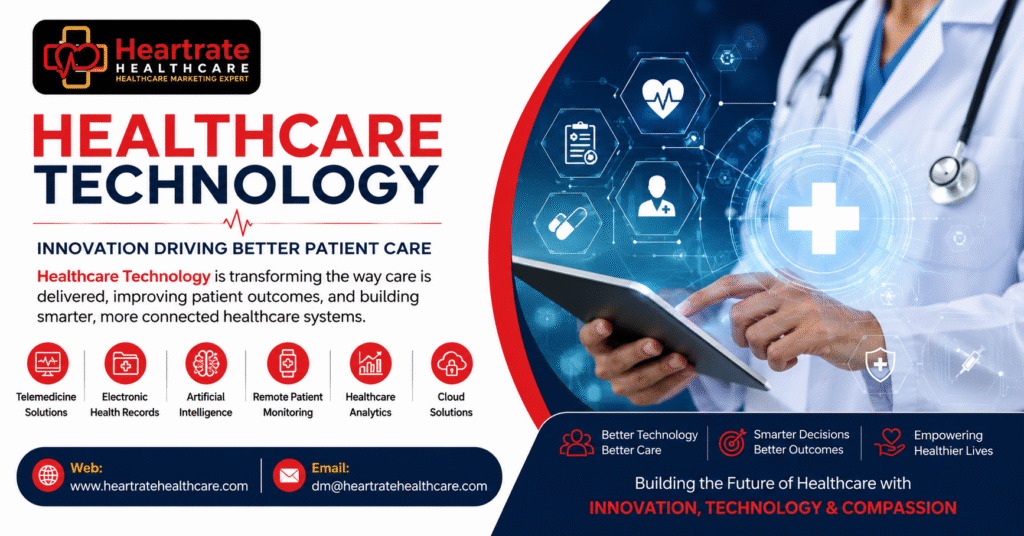
The healthcare industry is experiencing a remarkable transformation driven by Healthcare Technology. From electronic health records and artificial intelligence to telemedicine and remote patient monitoring, technological advancements are reshaping the way healthcare providers deliver care and how patients manage their health.
As medical organizations strive to improve efficiency, reduce costs, and enhance patient outcomes, Healthcare Technology has become an essential component of modern healthcare systems. Healthcare providers, hospitals, clinics, and healthcare companies increasingly rely on digital solutions to meet growing patient demands while maintaining high standards of care.
At Heartrate Healthcare (HRHC), we understand the critical role technology plays in improving healthcare services and enabling better patient experiences. Through innovative solutions and healthcare-focused strategies, organizations can leverage technology to create more connected, efficient, and patient-centered healthcare environments.
What is Healthcare Technology?
Healthcare Technology refers to the application of technology, software, devices, systems, and digital tools designed to improve healthcare delivery, patient outcomes, medical research, and administrative processes.
Modern healthcare technology encompasses a wide range of innovations, including:
- Electronic Health Records (EHR)
- Telemedicine Platforms
- Artificial Intelligence (AI)
- Machine Learning Solutions
- Remote Patient Monitoring
- Medical Wearable Devices
- Healthcare Analytics
- Cloud Computing
- Mobile Health Applications
- Healthcare Automation Systems
These technologies help healthcare providers deliver more accurate diagnoses, personalized treatments, and efficient patient care.
The Evolution of Healthcare Technology
Healthcare has evolved significantly over the past few decades. Traditional paper-based systems have gradually been replaced by digital platforms that improve accessibility, security, and efficiency.
The journey of healthcare technology includes:
Paper Records to Digital Records
Electronic Health Records have transformed patient data management by allowing healthcare professionals to access medical information quickly and securely.
Rise of Telemedicine
Telemedicine became increasingly important as healthcare providers sought convenient ways to connect with patients remotely. Virtual consultations now allow patients to receive care from the comfort of their homes.
Artificial Intelligence Integration
AI-powered solutions assist physicians in diagnosing diseases, analyzing medical images, and predicting patient risks with greater accuracy.
Connected Healthcare Systems
Interoperability and cloud-based systems enable seamless communication between hospitals, clinics, laboratories, and healthcare providers.
Key Components of Healthcare Technology
Electronic Health Records (EHR)
Electronic Health Records serve as the digital foundation of modern healthcare. EHR systems store patient histories, prescriptions, laboratory results, treatment plans, and clinical notes.
Benefits include:
- Improved data accuracy
- Enhanced patient safety
- Faster access to medical records
- Better care coordination
- Reduced paperwork
Telemedicine and Virtual Care
Telemedicine has revolutionized healthcare accessibility by enabling remote consultations between healthcare providers and patients.
Advantages include:
- Increased convenience
- Reduced travel time
- Faster appointment scheduling
- Improved access for rural communities
- Enhanced patient engagement
Artificial Intelligence in Healthcare
Artificial Intelligence plays a growing role in healthcare decision-making and operational efficiency.
Applications include:
- Disease detection
- Medical imaging analysis
- Predictive analytics
- Clinical decision support
- Personalized treatment recommendations
AI helps healthcare professionals make more informed decisions while improving diagnostic accuracy.
Remote Patient Monitoring
Remote monitoring technologies allow healthcare providers to track patient health data outside traditional clinical settings.
Common monitoring tools include:
- Heart rate monitors
- Blood pressure devices
- Glucose monitoring systems
- Wearable health trackers
- Smart medical devices
These technologies support proactive healthcare management and early intervention.
Healthcare Analytics
Healthcare analytics converts large volumes of medical data into actionable insights.
Organizations use analytics to:
- Improve patient outcomes
- Reduce healthcare costs
- Identify population health trends
- Optimize resource allocation
- Enhance operational efficiency
Benefits of Healthcare Technology
Improved Patient Care
One of the most significant advantages of healthcare technology is improved patient care. Digital tools help healthcare professionals make informed decisions based on real-time patient information.
Enhanced Operational Efficiency
Automation reduces administrative burdens and streamlines workflows across healthcare organizations.
Examples include:
- Automated appointment scheduling
- Billing automation
- Claims processing
- Workflow management
- Resource planning
Better Communication
Technology facilitates communication between healthcare providers, patients, caregivers, and support teams.
Secure communication platforms improve collaboration and care coordination.
Increased Patient Engagement
Mobile applications and patient portals empower individuals to actively participate in managing their health.
Patients can:
- Access medical records
- Schedule appointments
- Review test results
- Communicate with providers
- Track health metrics
Cost Reduction
Healthcare organizations can reduce costs through improved efficiency, automation, and data-driven decision-making.
Emerging Trends in Healthcare Technology
Artificial Intelligence and Machine Learning
AI continues to expand its impact across healthcare settings. Machine learning algorithms analyze complex datasets to identify patterns and support clinical decision-making.
Future applications may include:
- Advanced diagnostics
- Personalized medicine
- Drug discovery
- Risk prediction
- Preventive care strategies
Internet of Medical Things (IoMT)
The Internet of Medical Things connects medical devices, sensors, and healthcare systems through secure networks.
Benefits include:
- Real-time monitoring
- Continuous data collection
- Improved patient management
- Enhanced clinical visibility
Cloud-Based Healthcare Solutions
Cloud computing enables healthcare organizations to store, access, and manage data securely.
Advantages include:
- Scalability
- Cost efficiency
- Improved collaboration
- Enhanced data security
- Remote accessibility
Cybersecurity in Healthcare
As digital adoption increases, protecting patient information becomes increasingly important.
Healthcare organizations invest in:
- Data encryption
- Multi-factor authentication
- Threat detection systems
- Security monitoring
- Compliance management
Personalized Healthcare
Technology enables personalized healthcare approaches based on patient-specific data, genetics, lifestyle factors, and medical history.
Personalized care improves treatment effectiveness while enhancing patient satisfaction.
Challenges in Healthcare Technology Implementation
While healthcare technology offers numerous benefits, organizations may face implementation challenges.
Data Privacy Concerns
Protecting sensitive patient information remains a top priority for healthcare organizations.
Compliance requirements often include:
- HIPAA compliance
- Data protection regulations
- Security standards
- Privacy policies
Integration Complexity
Healthcare providers often use multiple systems that must communicate effectively.
Successful integration requires:
- Interoperability standards
- Strategic planning
- Technical expertise
- Ongoing support
Staff Training
Healthcare professionals need proper training to effectively use new technologies.
Organizations should invest in:
- User education
- Training programs
- Technical support
- Continuous learning initiatives
Financial Investment
Implementing healthcare technology solutions may require substantial initial investments.
However, long-term benefits often outweigh implementation costs through improved efficiency and patient outcomes.
The Role of Healthcare Technology in Patient Experience
Patient experience has become a major focus for healthcare organizations.
Technology improves patient experiences through:
Faster Access to Care
Digital scheduling systems and virtual consultations reduce waiting times and improve accessibility.
Transparent Communication
Patient portals provide direct access to healthcare information and treatment updates.
Convenient Healthcare Services
Mobile health applications allow patients to manage healthcare needs from anywhere.
Personalized Interactions
Technology supports customized healthcare experiences tailored to individual patient needs.
Healthcare Technology and Population Health Management
Population health management involves improving health outcomes across large groups of individuals.
Technology supports population health initiatives through:
- Data analytics
- Risk stratification
- Preventive care programs
- Chronic disease management
- Community health monitoring
Healthcare organizations can identify high-risk populations and implement targeted interventions.
How Heartrate Healthcare (HRHC) Supports Healthcare Technology Growth
Heartrate Healthcare (HRHC) recognizes the importance of technology-driven healthcare transformation. Modern healthcare organizations require reliable digital solutions that enhance patient engagement, improve operational efficiency, and support sustainable growth.
Healthcare technology initiatives supported by HRHC focus on:
- Healthcare digital transformation
- Healthcare marketing solutions
- Healthcare website development
- Patient engagement strategies
- Healthcare business process optimization
- Data-driven healthcare growth
- Digital healthcare innovation
By combining healthcare expertise with advanced technology solutions, organizations can improve service delivery and create meaningful patient experiences.
Future of Healthcare Technology
The future of healthcare technology promises even greater innovation and advancement.
Key developments expected in the coming years include:
- Expanded AI adoption
- Advanced predictive analytics
- Enhanced telemedicine services
- Smart healthcare ecosystems
- Precision medicine
- Robotics-assisted healthcare
- Virtual reality medical training
- Blockchain healthcare applications
These innovations will continue to transform healthcare delivery while improving patient outcomes and operational performance.
Conclusion
Healthcare Technology is revolutionizing the healthcare industry by improving patient care, enhancing operational efficiency, and enabling data-driven decision-making. From electronic health records and telemedicine to artificial intelligence and remote patient monitoring, technology continues to reshape every aspect of healthcare delivery.
Organizations that embrace healthcare technology gain significant advantages in patient satisfaction, clinical outcomes, and business performance. As healthcare continues to evolve, technology will remain a critical driver of innovation and growth.
Heartrate Healthcare (HRHC) remains committed to supporting healthcare organizations in leveraging technology to create better patient experiences, improve healthcare operations, and achieve long-term success in an increasingly digital healthcare landscape.