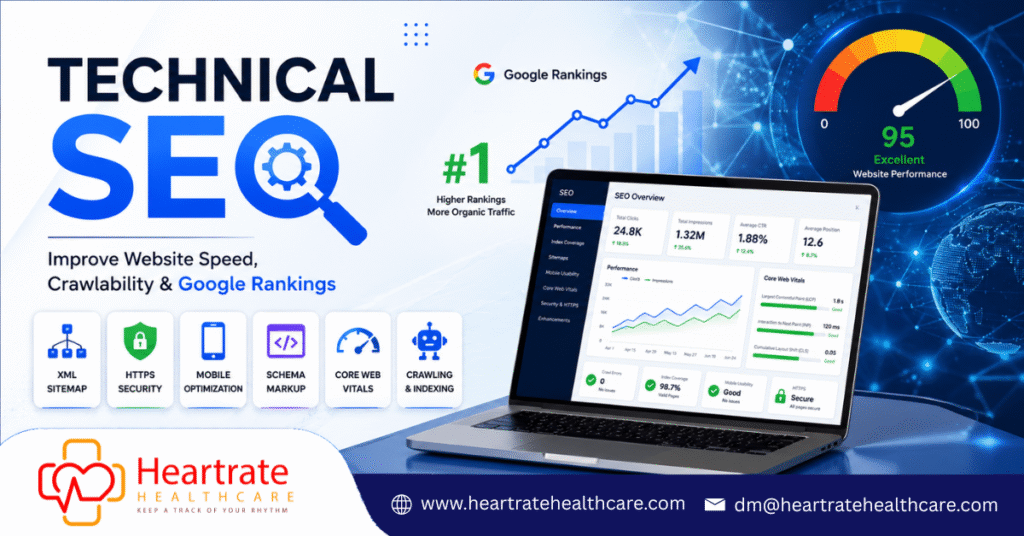

Technical SEO: The Foundation of Modern Search Engine Optimization
In today’s competitive digital environment, Technical SEO plays a crucial role in ensuring websites perform efficiently and rank higher on search engines. While content and backlinks remain important, search engines first need to crawl, understand, and index your website properly. This is where Technical SEO becomes essential.
At Heartrate Healthcare (HRHC), we understand that a technically optimized website creates the foundation for successful online visibility. Whether you operate a healthcare business, eCommerce platform, SaaS company, or corporate website, implementing Technical SEO best practices can significantly improve search engine rankings, user experience, and website performance.
What is Technical SEO?
Technical SEO refers to the process of optimizing a website’s technical infrastructure to help search engines crawl, index, and rank web pages efficiently. Unlike on-page SEO, which focuses on content and keywords, Technical SEO concentrates on backend elements that influence search engine accessibility.
Major components include:
- Website speed optimization
- Mobile-friendliness
- XML sitemap implementation
- Robots.txt configuration
- Structured data markup
- HTTPS security
- Crawlability improvements
- Indexation management
- Core Web Vitals optimization
- URL structure enhancement
A strong Technical SEO strategy ensures search engines can access your website without obstacles.
Why Technical SEO Matters for Businesses
Search engines like Google prioritize websites that offer excellent user experiences. Poor technical performance can prevent even high-quality content from ranking effectively.
Benefits of Technical SEO include:
Improved Search Rankings
Search engines favor technically optimized websites because they are easier to crawl and index.
Faster Website Loading Speed
A fast-loading website improves user engagement and reduces bounce rates.
Better Mobile Experience
Mobile-first indexing means websites must perform well across all devices.
Enhanced Crawl Efficiency
Proper technical optimization helps search engine bots discover important pages quickly.
Increased Organic Traffic
Higher rankings often result in more qualified visitors from search engines.
Core Elements of Technical SEO
1. Website Crawlability
Search engines use bots to crawl websites. If bots encounter errors, pages may not appear in search results.
Best practices include:
- Creating clean internal linking structures
- Avoiding broken links
- Maintaining XML sitemaps
- Optimizing robots.txt files
2. Website Indexation
Indexation determines whether pages are included in Google’s database.
Key considerations:
- Remove duplicate content
- Use canonical tags
- Manage noindex directives properly
- Monitor indexed pages regularly
3. XML Sitemap Optimization
XML sitemaps help search engines discover important pages.
A properly configured sitemap should:
- Include valuable pages only
- Update automatically
- Exclude unnecessary URLs
- Be submitted through Google Search Console
4. Robots.txt Configuration
The robots.txt file instructs search engine crawlers regarding accessible pages.
Benefits include:
- Preventing crawl budget waste
- Protecting sensitive directories
- Improving crawler efficiency
5. HTTPS Security
Google considers website security a ranking factor.
HTTPS benefits:
- Data encryption
- User trust
- Better SEO performance
- Enhanced browser compatibility
Website Speed and Technical SEO
Website speed directly impacts rankings and user satisfaction.
Important optimization techniques include:
Image Optimization
- Compress large images
- Use WebP formats
- Enable lazy loading
Browser Caching
Caching reduces page load times for returning visitors.
Minification
Reduce CSS, JavaScript, and HTML file sizes.
Content Delivery Networks (CDNs)
CDNs improve global website performance.
Server Optimization
Choose reliable hosting providers with fast server response times.
At Heartrate Healthcare (HRHC), speed optimization forms a critical part of every Technical SEO strategy.
Mobile Optimization in Technical SEO
Google uses mobile-first indexing, making mobile optimization essential.
Best practices:
- Responsive website design
- Touch-friendly navigation
- Mobile speed optimization
- Readable content formatting
- Proper viewport configuration
Mobile usability significantly influences overall SEO performance.
Core Web Vitals and Technical SEO
Core Web Vitals are Google’s user experience metrics.
Largest Contentful Paint (LCP)
Measures loading performance.
Target:
- Under 2.5 seconds
Interaction to Next Paint (INP)
Measures responsiveness.
Target:
- Under 200 milliseconds
Cumulative Layout Shift (CLS)
Measures visual stability.
Target:
- Less than 0.1
Optimizing these metrics strengthens overall Technical SEO performance.
Structured Data and Schema Markup
Structured data helps search engines understand content context.
Common schema types include:
- Organization Schema
- Medical Organization Schema
- FAQ Schema
- Article Schema
- Local Business Schema
- Product Schema
- Review Schema
Schema implementation can increase visibility through rich search results.
For healthcare businesses, schema plays a particularly important role in establishing credibility.
URL Structure Optimization
SEO-friendly URLs improve both user experience and search engine understanding.
Example:
Good URL:
https://heartratehealthcare.com/technical-seo-guidePoor URL:
https://heartratehealthcare.com/page?id=12345Best practices:
- Keep URLs short
- Include target keywords
- Use hyphens
- Avoid unnecessary parameters
Internal Linking Strategy
Internal linking strengthens website architecture and distributes authority across pages.
Benefits include:
- Improved crawlability
- Better user navigation
- Increased page authority
- Enhanced indexing
Every Technical SEO campaign should include strategic internal linking improvements.
Duplicate Content Management
Duplicate content can confuse search engines and dilute ranking signals.
Solutions include:
- Canonical tags
- Redirect management
- URL parameter handling
- Content consolidation
Proper duplicate content management is a fundamental aspect of Technical SEO.
Common Technical SEO Issues
Many websites suffer from technical problems that limit rankings.
Examples include:
Broken Links
404 errors harm user experience and crawl efficiency.
Redirect Chains
Multiple redirects slow page loading and waste crawl budget.
Orphan Pages
Pages without internal links become difficult to discover.
Duplicate Meta Tags
Confusing signals reduce optimization effectiveness.
Slow Page Speed
Performance issues negatively affect rankings and conversions.
Regular audits help identify and resolve these challenges.
Conducting a Technical SEO Audit
A complete audit evaluates website health and optimization opportunities.
Audit areas include:
- Crawl errors
- Index coverage
- Mobile usability
- Core Web Vitals
- Site speed
- Security
- Structured data
- Internal linking
- Redirects
- Sitemap performance
Professional audits provide actionable insights for sustainable growth.
Best Tools for Technical SEO
Several tools assist in website analysis and optimization.
Popular solutions include:
- Google Search Console
- Google Analytics
- Google PageSpeed Insights
- Screaming Frog SEO Spider
- Ahrefs
- SEMrush
- GTmetrix
- Bing Webmaster Tools
These platforms help monitor and improve technical performance.
Technical SEO for Healthcare Websites
Healthcare websites face unique challenges regarding trust, security, and compliance.
Important focus areas:
- HTTPS implementation
- Fast page loading
- Medical schema markup
- Mobile optimization
- Secure patient information
- Search engine accessibility
As a healthcare-focused organization, Heartrate Healthcare (HRHC) understands the specialized requirements of healthcare SEO and technical website optimization.
Future Trends in Technical SEO
Search engines continue evolving rapidly.
Emerging trends include:
AI-Powered Search
Search engines increasingly use artificial intelligence to understand content.
User Experience Signals
Behavioral metrics continue gaining importance.
Enhanced Structured Data
Rich results are becoming more prominent.
Voice Search Optimization
Technical foundations support voice-search visibility.
Advanced Performance Metrics
User-centric measurements will influence rankings further.
Businesses that stay ahead of these developments will maintain competitive advantages.
Why Choose Heartrate Healthcare (HRHC) for Technical SEO
Heartrate Healthcare (HRHC) delivers comprehensive digital solutions designed to improve website performance and search visibility.
Our services include:
- Complete SEO Audits
- Website Optimization
- Core Web Vitals Improvements
- Schema Markup Implementation
- Speed Optimization
- Mobile SEO
- Technical Error Resolution
- Search Console Management
- Healthcare SEO Solutions
- Long-Term SEO Strategy Development
We focus on building technically strong websites that support sustainable growth and improved search engine rankings.
Conclusion
Technical SEO serves as the backbone of successful search engine optimization. Without proper crawlability, indexation, speed, security, and user experience, even the best content may struggle to rank effectively.
Organizations investing in Technical SEO gain significant advantages through improved search visibility, faster website performance, enhanced user experience, and increased organic traffic. By implementing modern technical optimization strategies, businesses can create a solid foundation for long-term SEO success.
Heartrate Healthcare (HRHC) specializes in delivering advanced Technical SEO solutions that help businesses maximize their online presence, improve rankings, and achieve measurable digital growth. Whether you need a comprehensive SEO audit, speed optimization, schema implementation, or full technical website enhancement, HRHC provides the expertise necessary to support your success in today’s competitive digital landscape.