
On Page SEO: The Complete Guide to Better Rankings and User Experience
In today’s competitive digital world, businesses need more than just a website to attract visitors and generate leads. Search engines like Google prioritize websites that offer valuable content, excellent user experience, and proper optimization. This is where On Page SEO becomes essential.
On Page SEO refers to all optimization techniques performed directly on a website to improve its visibility in search engines and provide a better experience for users. From optimizing titles and headings to improving content quality and page speed, every element plays a vital role in helping websites rank higher.
At Heartrate Healthcare (HRHC), we understand the importance of creating search-engine-friendly websites that not only rank well but also engage users effectively. This guide explains everything you need to know about On Page SEO, its benefits, best practices, and strategies to achieve long-term success.
What is On Page SEO?
On Page SEO is the process of optimizing individual web pages to improve their rankings in search engine results pages (SERPs). It focuses on both content and HTML source code elements that can be controlled directly by website owners.
Unlike Off-Page SEO, which involves backlinks and external signals, On Page SEO deals with factors present on your website itself.
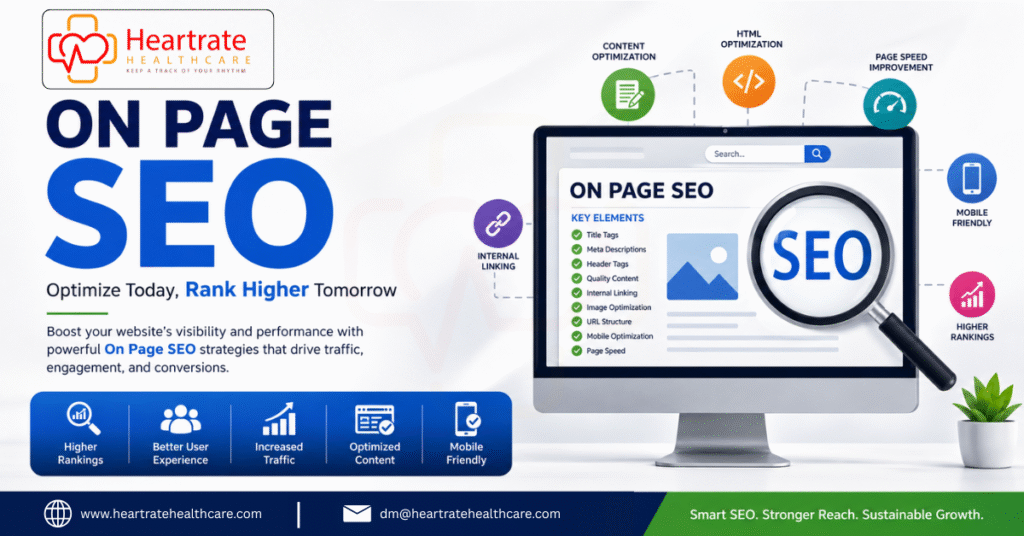
Some important elements include:
- Content optimization
- Keyword placement
- Meta tags
- Header tags
- URL structure
- Internal linking
- Image optimization
- Mobile responsiveness
- Page speed
- User experience
Proper On Page SEO ensures search engines understand your content while making it easier for users to navigate your website.
Why On Page SEO Matters
Search engines aim to provide users with the most relevant and helpful results. Websites that implement strong On Page SEO practices have a higher chance of appearing at the top of search results.
Benefits of On Page SEO
1. Higher Search Rankings
Optimized pages help search engines understand your content better, improving rankings for target keywords.
2. Better User Experience
Visitors stay longer when content is organized, easy to read, and mobile-friendly.
3. Increased Organic Traffic
Higher rankings naturally lead to more clicks and website visitors.
4. Improved Conversion Rates
A well-optimized page guides users toward desired actions such as inquiries, purchases, or subscriptions.
5. Enhanced Website Authority
Consistent optimization helps establish credibility within your industry.
Core Elements of On Page SEO
1. Keyword Research
Keyword research is the foundation of every successful On Page SEO strategy.
Before creating content, identify keywords that your audience actively searches for.
Types of Keywords
- Primary Keywords
- Secondary Keywords
- Long-Tail Keywords
- Semantic Keywords
- Local Keywords
Examples of relevant keywords:
- SEO optimization
- Website optimization
- Search engine optimization
- SEO services
- Technical SEO
- Content optimization
- Google ranking factors
- SEO best practices
- Mobile SEO
- Page speed optimization
Using relevant keywords naturally throughout your content helps search engines understand the topic.
2. Optimizing Title Tags
The title tag is one of the most important ranking factors in On Page SEO.
Best Practices
- Place the primary keyword near the beginning.
- Keep titles under 60 characters.
- Make titles compelling for users.
- Avoid keyword stuffing.
Example:
On Page SEO Strategies to Improve Rankings and User Experience
A strong title increases both rankings and click-through rates.
3. Writing Effective Meta Descriptions
Meta descriptions influence whether users click your result.
Tips
- Include the target keyword.
- Keep length around 150-160 characters.
- Create a compelling call to action.
- Clearly describe page content.
An optimized meta description improves visibility and user engagement.
4. Header Tag Optimization
Header tags help organize content and improve readability.
Structure
- H1: Main title
- H2: Major sections
- H3: Subsections
- H4-H6: Supporting topics
Benefits include:
- Improved content structure
- Better user experience
- Enhanced keyword relevance
- Easier crawling by search engines
Proper header hierarchy is a crucial component of On Page SEO.
5. High-Quality Content Creation
Content remains one of the most important ranking factors.
Google rewards websites that provide valuable, accurate, and useful information.
Characteristics of High-Quality Content
- Original
- Informative
- Well-structured
- Easy to understand
- Relevant to user intent
- Regularly updated
When creating content, focus on solving user problems rather than simply inserting keywords.
Understanding Search Intent
Search intent refers to the reason behind a user’s search query.
Types of Search Intent
Informational Intent
Users seek information.
Example:
“What is SEO?”
Navigational Intent
Users look for a specific website.
Example:
“Heartrate Healthcare”
Commercial Intent
Users compare products or services.
Example:
“Best SEO company”
Transactional Intent
Users are ready to take action.
Example:
“Buy SEO services”
Matching content with user intent significantly improves On Page SEO performance.
6. URL Optimization
Search-friendly URLs help users and search engines understand page content.
Good URL Example
yourwebsite.com/on-page-seo-guide
Poor URL Example
yourwebsite.com/page?id=12345
URL Best Practices
- Keep URLs short
- Include keywords
- Use hyphens
- Avoid unnecessary parameters
- Make them readable
Clean URLs improve usability and indexing.
7. Internal Linking Strategy
Internal links connect pages within your website.
Benefits
- Improves navigation
- Distributes page authority
- Helps search engines crawl content
- Increases user engagement
For example, a blog about SEO services can link to pages covering content marketing, website development, or Digital Marketing.
Strong internal linking is a critical aspect of On Page SEO.
8. Image Optimization
Images enhance user experience but can slow websites if not optimized properly.
Best Practices
- Compress images
- Use descriptive file names
- Add ALT text
- Choose modern formats
- Ensure responsiveness
Example ALT text:
“On Page SEO optimization strategy”
Optimized images improve accessibility and search visibility.
9. Mobile-Friendly Design
Google uses mobile-first indexing.
This means Google primarily evaluates the mobile version of a website.
Mobile SEO Checklist
- Responsive design
- Readable text
- Fast loading speed
- Mobile-friendly navigation
- Proper spacing
A mobile-friendly website contributes significantly to successful On Page SEO.
10. Page Speed Optimization
Page speed directly impacts rankings and user satisfaction.
Ways to Improve Speed
- Compress images
- Enable browser caching
- Use a CDN
- Minify CSS and JavaScript
- Reduce redirects
- Upgrade hosting
Fast websites generally achieve higher engagement and conversion rates.
Advanced On Page SEO Techniques
Schema Markup
Schema markup helps search engines understand page content more effectively.
Common Types
- Organization Schema
- FAQ Schema
- Article Schema
- Product Schema
- Local Business Schema
Benefits include:
- Rich snippets
- Better visibility
- Higher click-through rates
E-E-A-T Optimization
Google emphasizes:
- Experience
- Expertise
- Authoritativeness
- Trustworthiness
How to Improve E-E-A-T
- Publish expert content
- Display author information
- Cite trustworthy sources
- Maintain website security
- Showcase credentials
Strong E-E-A-T signals support long-term On Page SEO success.
Content Freshness
Regularly updating content helps maintain rankings.
Update Content By:
- Adding new information
- Updating statistics
- Improving readability
- Expanding sections
- Fixing broken links
Fresh content signals relevance to search engines.
User Experience and SEO
User experience (UX) and SEO are closely connected.
Important UX Factors
- Easy navigation
- Clear design
- Fast loading speed
- Mobile compatibility
- Readable content
Positive user experiences often result in:
- Lower bounce rates
- Higher engagement
- Better rankings
Common On Page SEO Mistakes
Avoid these common errors:
Keyword Stuffing
Excessive keyword usage can harm rankings.
Duplicate Content
Unique content is essential.
Missing Meta Tags
Every important page should have optimized metadata.
Poor Mobile Experience
Mobile issues can negatively affect rankings.
Slow Website Speed
Performance problems reduce user satisfaction.
Broken Links
Broken links create a poor user experience.
Thin Content
Low-quality content rarely performs well in search results.
Measuring On Page SEO Success
Several metrics can help evaluate performance.
Organic Traffic
Measures visitors from search engines.
Keyword Rankings
Tracks visibility improvements.
Click-Through Rate (CTR)
Shows how often users click your result.
Bounce Rate
Measures user engagement.
Conversion Rate
Tracks goal completions.
Average Session Duration
Indicates content effectiveness.
Monitoring these metrics helps refine your On Page SEO strategy.
The Future of On Page SEO
SEO continues to evolve as search engines become more sophisticated.
Emerging Trends
Artificial Intelligence
AI-driven search is influencing content evaluation.
Voice Search
Conversational queries are increasing.
Core Web Vitals
Performance metrics remain important.
User-Centered Content
Google increasingly rewards helpful content.
Semantic Search
Search engines focus more on meaning and context rather than exact keyword matching.
Businesses that adapt to these trends will maintain stronger visibility in search results.
How Heartrate Healthcare (HRHC) Supports SEO Growth
Heartrate Healthcare (HRHC) provides comprehensive digital solutions designed to help businesses improve online visibility and generate quality leads.
Our services include:
- SEO Services
- Website Development
- Content Marketing
- Digital Marketing
- Technical SEO
- Website Optimization
- Mobile Optimization
- Healthcare Marketing Solutions
By combining modern SEO techniques with user-focused strategies, HRHC helps organizations achieve sustainable online growth.
Conclusion
On Page SEO remains one of the most powerful methods for improving website visibility, user experience, and search engine rankings. From keyword optimization and content creation to technical improvements and mobile responsiveness, every element contributes to overall performance.
Successful On Page SEO is not about manipulating search engines. It is about creating valuable, relevant, and accessible content that meets user needs while helping search engines understand your website.
Organizations that invest in consistent optimization, high-quality content, and excellent user experiences are better positioned for long-term digital success. Whether you operate a healthcare company, e-commerce business, or service-based organization, implementing effective On Page SEO strategies can significantly enhance your online presence and drive sustainable growth.
Heartrate Healthcare (HRHC) remains committed to helping businesses build stronger digital foundations through advanced SEO and marketing solutions.